
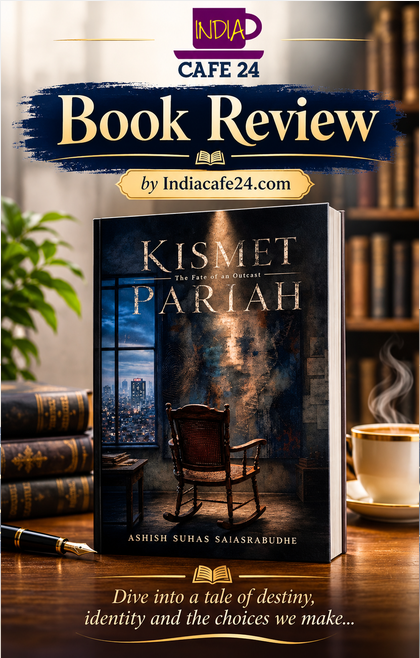
Book Review: Kismet Pariah by Ashish Suhas Sahasrabudhe
Book Review: Kismet Pariah by Ashish Suhas Sahasrabudhe
Some mysteries are built around a crime, while others take us on a deeper journey into human identity, destiny, social perceptions and the secrets people carry within themselves. Kismet Pariah by Ashish Suhas Sahasrabudhe is an intriguing crime thriller that brings these elements together.
Set against the unsettling backdrop of the COVID-19 lockdown, the novel immediately draws me into an atmosphere of uncertainty and suspense. What initially appears to be a straightforward case of an unnatural death gradually unfolds into a much more complicated mystery. I found the title particularly interesting because the words ‘Kismet’ and ‘Pariah’ bring together two contrasting ideas — destiny and social rejection — hinting at the deeper layers of the narrative.
Plot – Kismet Pariah
The story opens in Pune during the lockdown, where a man is found dead inside his bungalow under rather unusual circumstances. The seemingly peaceful appearance of the dead man and the carefully arranged surroundings raise questions that cannot be ignored.
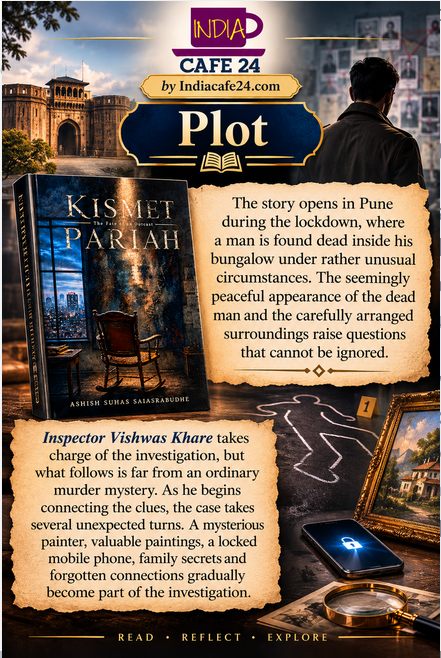
Inspector Vishwas Khare takes charge of the investigation, but what follows is far from an ordinary murder mystery. As he begins connecting the clues, the case takes several unexpected turns. A mysterious painter, valuable paintings, a locked mobile phone, family secrets and forgotten connections gradually become part of the investigation.
The narrative moves across Pune, Solapur and Mumbai, with the investigation unfolding over a span of 31 hours. I particularly enjoyed this time-bound structure because it creates an underlying urgency and keeps the mystery moving.
What makes the plot interesting is the way seemingly unrelated incidents and characters gradually become connected. Just when I begin forming an assumption about the mystery, another revelation challenges my understanding. The author successfully plays with appearances and expectations, making the journey of discovering the truth as important as the final revelation.
Premise – Kismet Pariah
Beyond its crime-thriller framework, I found the central premise of Kismet Pariah quite thought-provoking.
The novel explores identity, social acceptance, religious differences, family relationships and the consequences of judging people through conventional definitions of normality. It subtly questions how society treats individuals who do not fit into its accepted definitions and how circumstances can shape someone’s destiny.
The connection between art, identity and the mysterious painter adds another interesting dimension to the narrative. I liked how the author uses the investigation as a medium to explore issues that extend beyond the immediate crime.
For me, the most meaningful aspect of the premise is its underlying message about empathy and human dignity. Sometimes, the person society chooses to reject is the one who deserves the greatest understanding.
Character Development – Kismet Pariah
Inspector Vishwas Khare is an interesting protagonist. He is not portrayed as an extraordinary, larger-than-life detective but as an experienced police officer trying to perform his duty amidst complicated circumstances. His observations, investigative instincts and occasional uncertainties make him relatable.
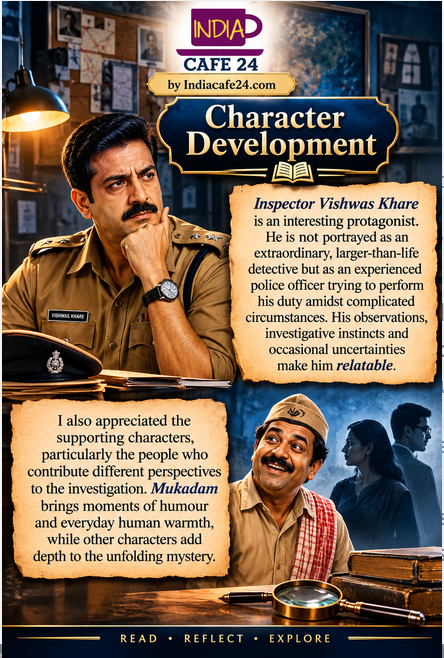
I also appreciated the supporting characters, particularly the people who contribute different perspectives to the investigation. Mukadam brings moments of humour and everyday human warmth, while other characters add depth to the unfolding mystery.
The characters are not merely present to move the investigation forward; their backgrounds, relationships and individual experiences contribute to the larger narrative. As the story progresses, I get a better understanding of their motivations and the complexities that define them.
Writing Style – Kismet Pariah
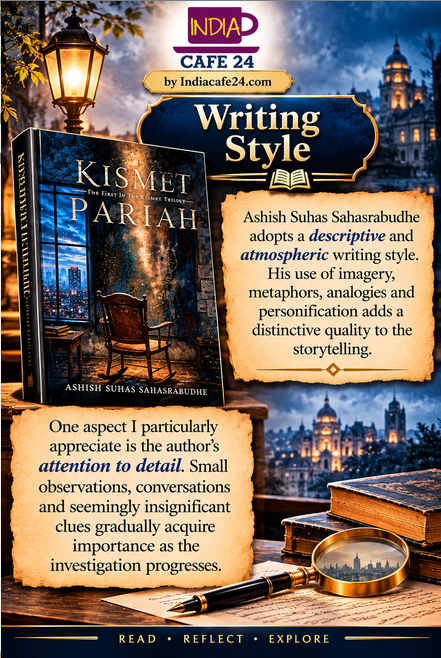
Ashish Suhas Sahasrabudhe adopts a descriptive and atmospheric writing style. His use of imagery, metaphors, analogies and personification adds a distinctive quality to the storytelling.
One aspect I particularly appreciate is the author’s attention to detail. Small observations, conversations and seemingly insignificant clues gradually acquire importance as the investigation progresses.
The lockdown setting is also effectively incorporated into the narrative. The deserted roads, restricted movement and unusual silence create an eerie atmosphere that complements the mystery.
The narrative keeps me curious about what lies ahead, although a few descriptive passages could have been more concise to maintain a smoother reading pace. Nevertheless, the author’s effort to create a layered mystery with an underlying philosophical dimension deserves appreciation.
Final Verdict – Kismet Pariah
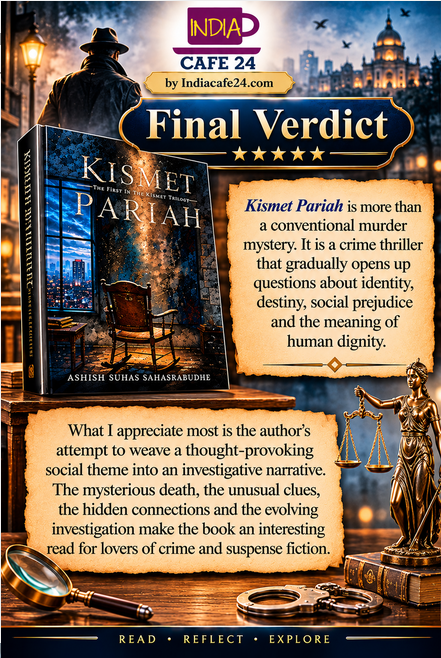
Kismet Pariah is more than a conventional murder mystery. It is a crime thriller that gradually opens up questions about identity, destiny, social prejudice and the meaning of human dignity.
What I appreciate most is the author’s attempt to weave a thought-provoking social theme into an investigative narrative. The mysterious death, the unusual clues, the hidden connections and the evolving investigation make the book an interesting read for lovers of crime and suspense fiction.
The novel also leaves me thinking about how easily society labels someone an outsider without understanding their circumstances or struggles.
If you enjoy investigative thrillers that combine suspense, unexpected connections and deeper human themes, Kismet Pariah deserves a place on your reading list.
A mystery of identity, a journey through destiny and a reminder that every human being deserves dignity.
This review is powered by Blogchatter Book Review Program.


Leave a Reply