
The Missing Smile
The Missing Smile
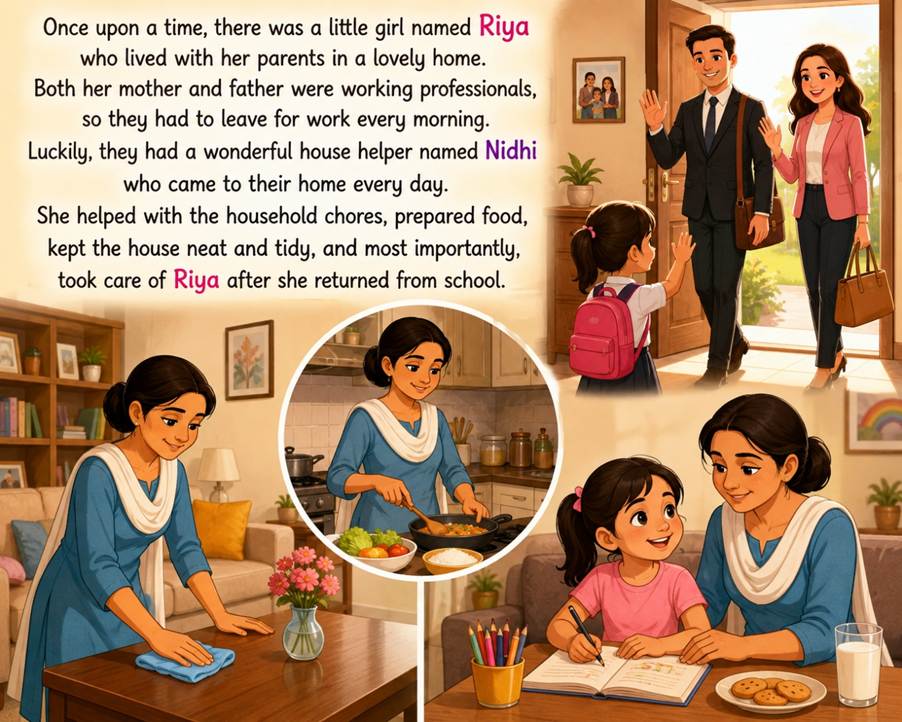
Once upon a time, there was a little girl named Riya who lived with her parents in a lovely home. Both her mother and father were working professionals, so they had to leave for work every morning.
Luckily, they had a wonderful house helper named Nidhi who came to their home every day. She helped with the household chores, prepared food, kept the house neat and tidy, and most importantly, took care of Riya after she returned from school.
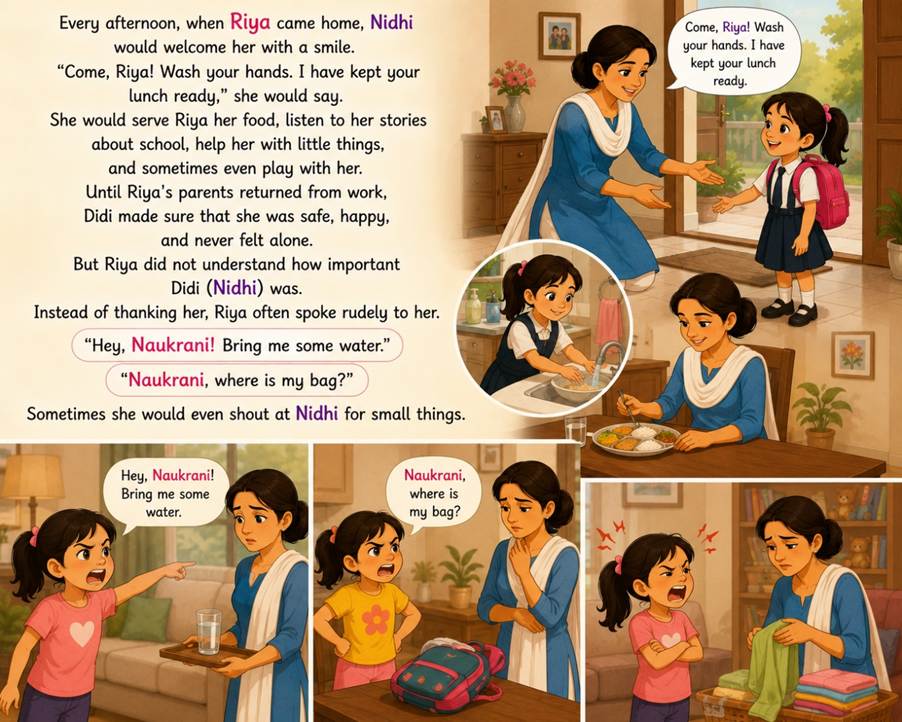
Every afternoon, when Riya came home, Nidhi would welcome her with a smile.
“Come, Riya! Wash your hands. I have kept your lunch ready,” she would say.
She would serve Riya her food, listen to her stories about school, help her with little things, and sometimes even play with her. Until Riya’s parents returned from work, Didi made sure that she was safe, happy, and never felt alone.
But Riya did not understand how important Didi (Nidhi) was.
Instead of thanking her, Riya often spoke rudely to her.
“Hey, Naukrani! Bring me some water.”
“Naukrani, where is my bag?”
Sometimes she would even shout at Nidhi for small things.
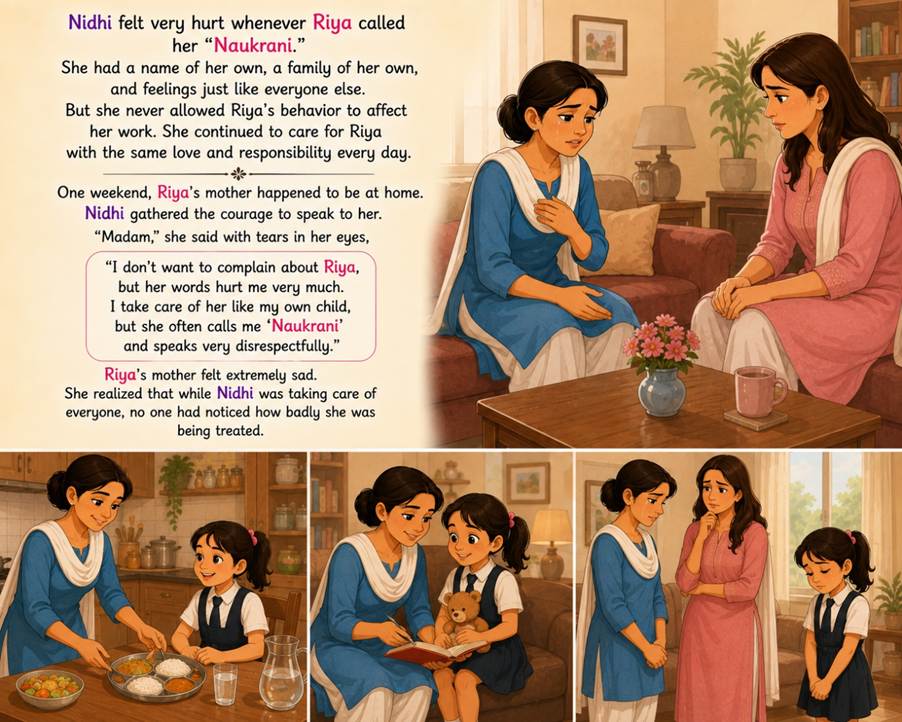
Nidhi felt very hurt whenever Riya called her “Naukrani.” She had a name of her own, a family of her own, and feelings just like everyone else. But she never allowed Riya’s behavior to affect her work. She continued to care for Riya with the same love and responsibility every day.
One weekend, Riya’s mother happened to be at home. Nidhi gathered the courage to speak to her.
“Madam,” she said with tears in her eyes, “I don’t want to complain about Riya, but her words hurt me very much. I take care of her like my own child, but she often calls me ‘Naukrani’ and speaks very disrespectfully.”
Riya’s mother felt extremely sad. She realized that while Nidhi was taking care of everyone, no one had noticed how badly she was being treated.
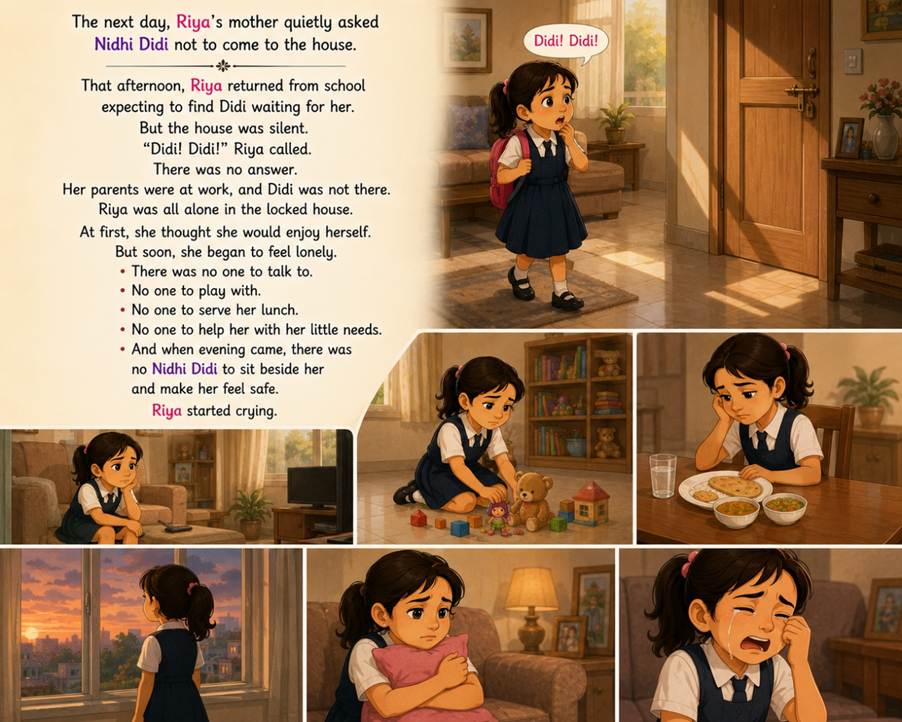
The next day, Riya’s mother quietly asked Nidhi Didi not to come to the house.
That afternoon, Riya returned from school expecting to find Didi waiting for her.
But the house was silent.
“Didi! Didi!” Riya called.
There was no answer.
Her parents were at work, and Didi was not there. Riya was all alone in the locked house.
At first, she thought she would enjoy herself. But soon, she began to feel lonely.
There was no one to talk to.
No one to play with.
No one to serve her lunch.
No one to help her with her little needs.
And when evening came, there was no Nidhi Didi to sit beside her and make her feel safe.
Riya started crying.
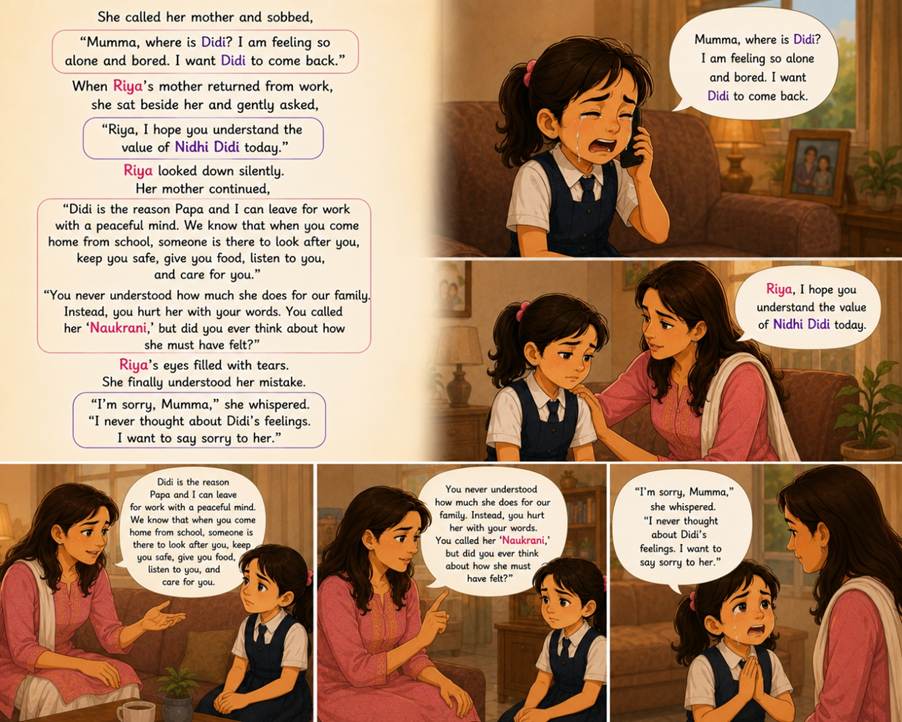
She called her mother and sobbed, “Mumma, where is Didi? I am feeling so alone and bored. I want Didi to come back.”
When Riya’s mother returned from work, she sat beside her and gently asked,
“Riya, I hope you understand the value of Nidhi Didi today.”
Riya looked down silently.
Her mother continued, “Didi is the reason Papa and I can leave for work with a peaceful mind. We know that when you come home from school, someone is there to look after you, keep you safe, give you food, listen to you, and care for you.”
“You never understood how much she does for our family. Instead, you hurt her with your words. You called her ‘Naukrani,’ but did you ever think about how she must have felt?”
Riya’s eyes filled with tears.
She finally understood her mistake.
“I’m sorry, Mumma,” she whispered. “I never thought about Didi’s feelings. I want to say sorry to her.”
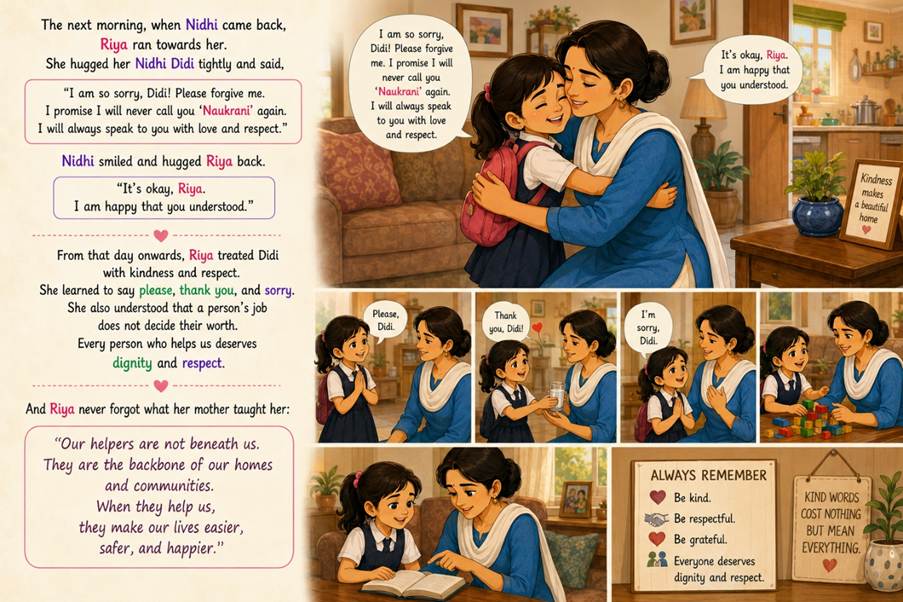
The next morning, when Nidhi came back, Riya ran towards her.
She hugged her Nidhi Didi tightly and said, “I am so sorry, Didi! Please forgive me. I promise I will never call you ‘Naukrani’ again. I will always speak to you with love and respect.”
Nidhi smiled and hugged Riya back.
“It’s okay, Riya. I am happy that you understood,” she said.
From that day onwards, Riya treated Didi with kindness and respect. She learned to say please, thank you, and sorry. She also understood that a person’s job does not decide their worth.
Every person who helps us deserves dignity and respect.
And Riya never forgot what her mother taught her:
“Our helpers are not beneath us. They are the backbone of our homes and communities. When they help us, they make our lives easier, safer, and happier.”
Moral of the Story
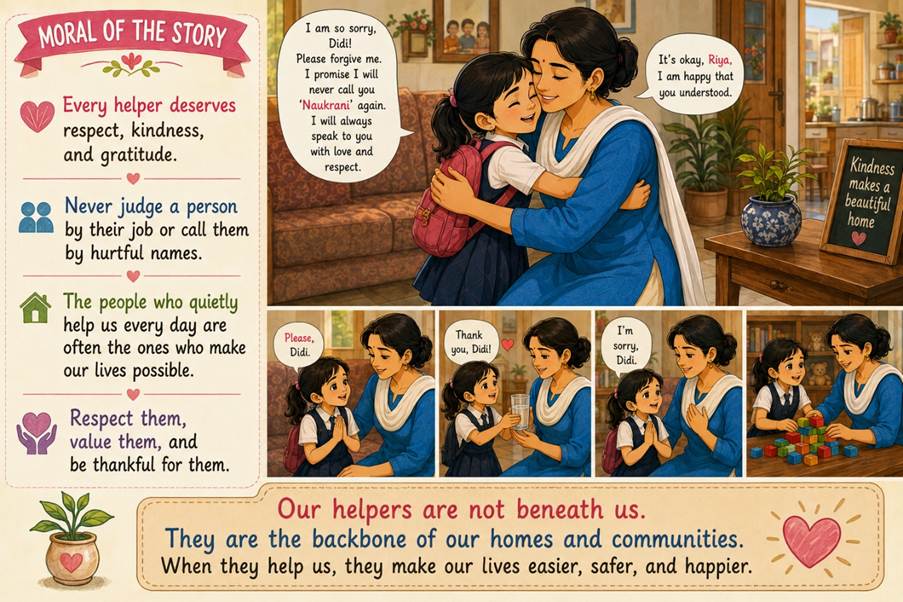
Every helper deserves respect, kindness, and gratitude. Never judge a person by their job or call them by hurtful names. The people who quietly help us every day are often the ones who make our lives possible. Respect them, value them, and be thankful for them.
This blog post is part of ‘Blogaberry Dazzle’
hosted by Cindy D’Silva and Noor Anand Chawla
in collaboration with Tanvi Agarwal.


Only you can express this so well. When we treat all work with respect is when we become whole and eventually a better society. I loved this. You should certainly make your stories into illustrated books, you have such a rich repository of lessons for children.
It’s great how Riya learned her lessons. And her mother was the one to make her realize that.
Riya’s loneliness once Didi was gone hits harder than any lecture ever could, that’s such a smart way to make a kid actually feel the lesson instead of just hearing it. The line about our helpers being the backbone of our homes deserves to be said out loud in a lot more households. Simple story, but the message about dignity lands exactly where it needs to.
What a lovely tale. We were in Indonesia for a few years. Most children growing up there treated the house help with disdain . Wish I could share this with them now
This story is a real one with spoilt, entitled kids treat their helpers as if they are doing them a favour by working for them. It is upto the parents t teach the kids to treat them as humans and on par.
Very beautifully presented story. You must compile your stories and create a picture book, Samata.
Such a tender, important story. It is so important to acknowledge our helpers. I have never kept a househelp but few years back asked my parents to keep for sometime and we were so grateful for her and still in contact with her even after she shifted to a different area.
It is so heartwarming with a subtle lesson without severe punishment to a kid, and the best part is the adult understanding the pain of a helper instead of giving away to the kid’s rudeness.
Such a simple but sweet story. We were taught as kids to be kind and respectful towards our helpers and have ensured our kids do the same. No job is small and everyone deserves to be treated nicely. Good lesson!
Absolutely agree. My kids call all helpers bhaiyya aur Didi only. Even in foreign countries where the helpers do not understand what it means!
Such a beautiful story and a lesson to learn. Not only Riya but everyone should learn to respect people from different classes and backgrounds, and to recognise that they can be maids or cleaners.
Such a touching story with a powerful lesson. Riya’s journey beautifully shows why kindness begins at home. Every helper deserves dignity, gratitude, and respect. A meaningful read for children and parents alike.
This is such a heartfelt story. Thanks for sharing this