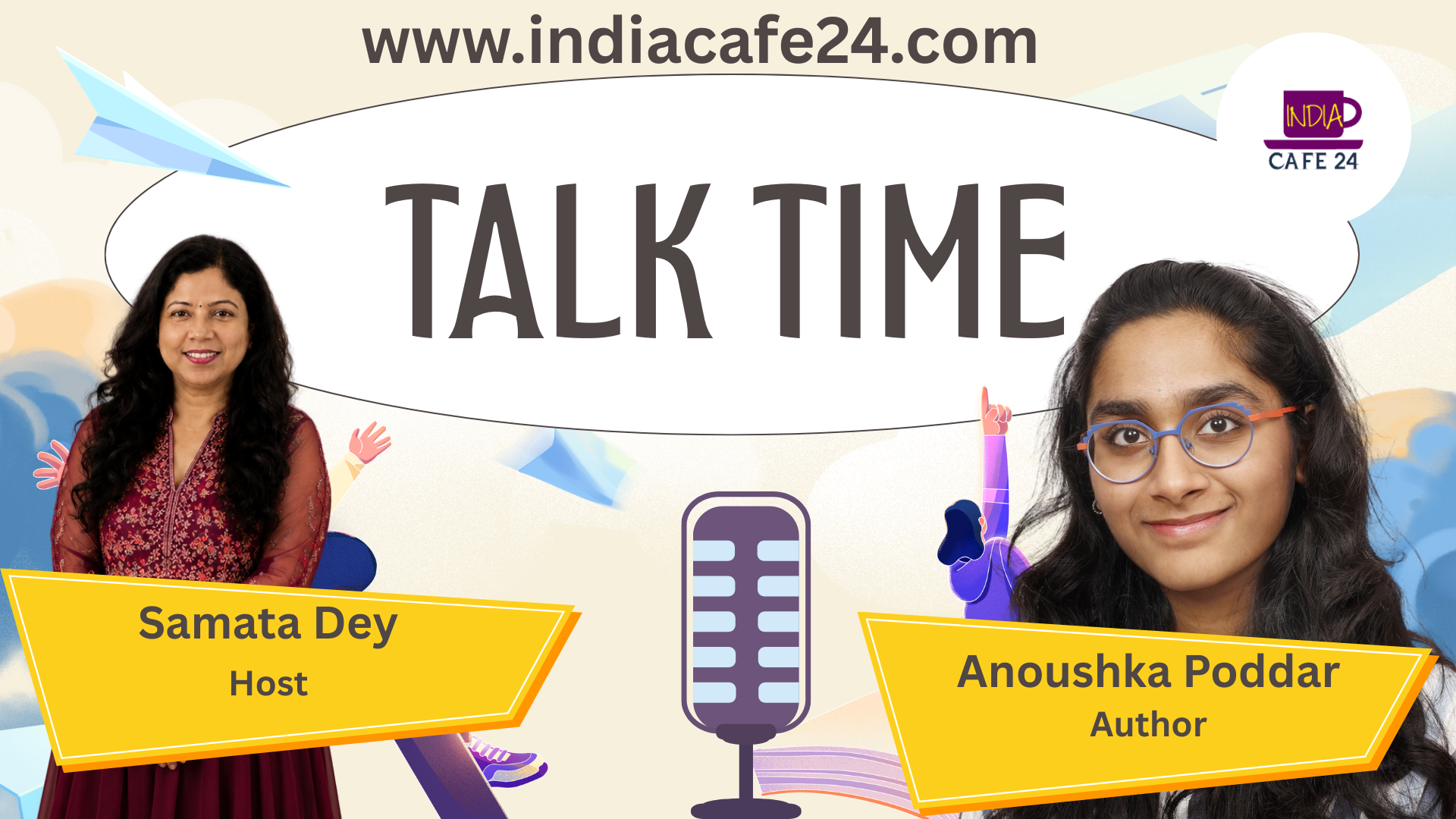
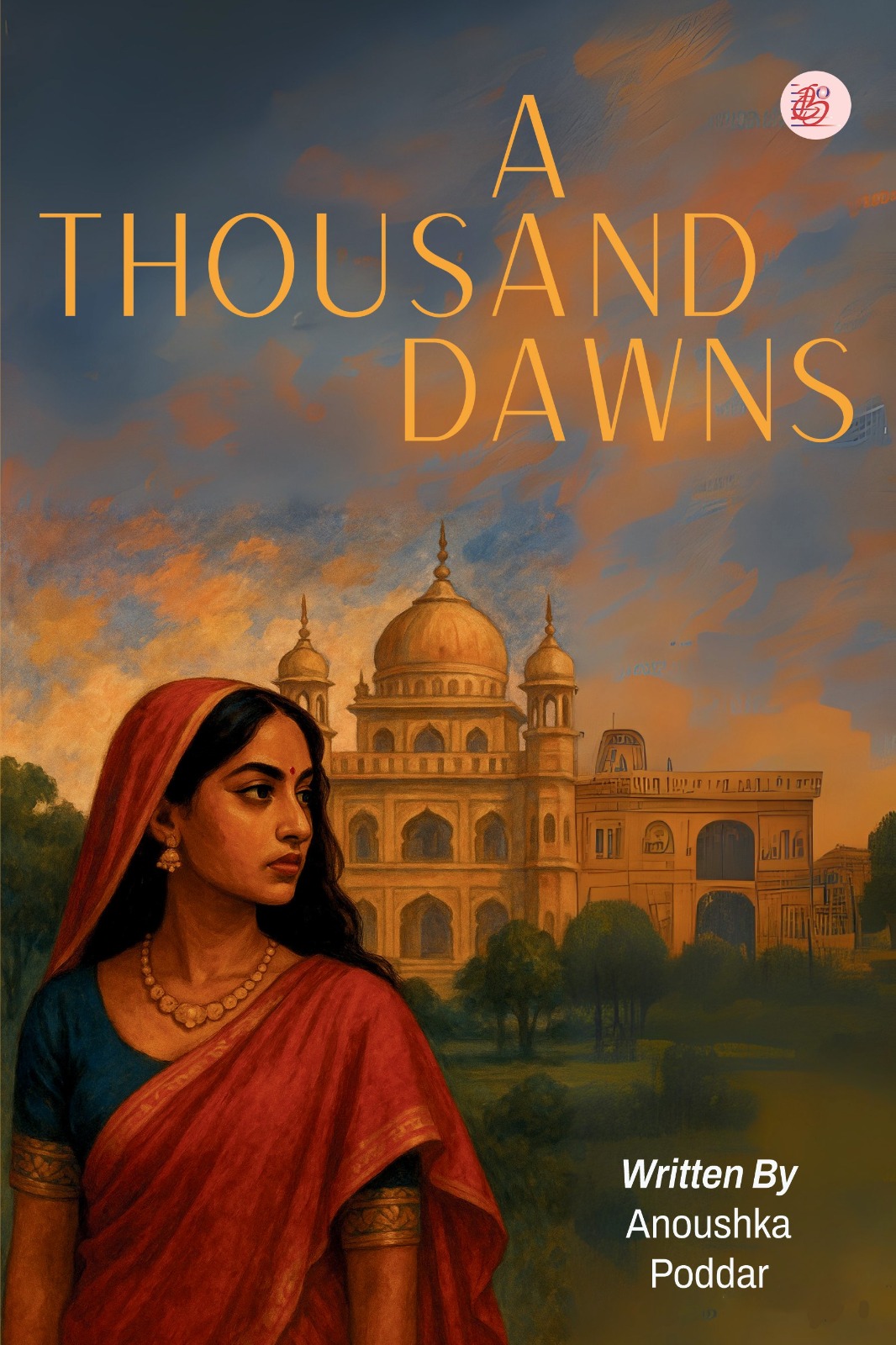
In this edition of Talk Time with Samata, we are delighted to feature the exceptionally talented Anoushka Poddar, a 17-year-old author from Kolkata who has already established herself as a remarkable voice in contemporary literature. A four-time published author, Anoushka combines her passion for storytelling with a deep interest in history, culture, folklore, and social issues. Her latest novel, A Thousand Dawns, reimagines a traditional Bengali folktale through a powerful feminist lens, bringing forgotten voices and overlooked perspectives to the forefront. In this engaging conversation, Anoushka shares her literary journey, the inspiration behind her work, the challenges of retelling folklore for modern readers, and her vision for preserving cultural heritage through storytelling.
Welcome to Talk Time with Samata. We are glad to have you with us for this session @ Indiacafe24. Anoushka, will request you to introduce yourself with a brief about you and your family.
Thank you for having me. My name is Anoushka Poddar, and I’m a 17-year-old writer from Kolkata. I come from a close-knit family that includes my parents, my sister, and my grandparents, all of whom have played an important role in shaping my interests and encouraging my creativity. Outside of writing, I enjoy reading, filmmaking, and engaging with social and cultural issues through both literature and research. Much of my work is inspired by the intersection of storytelling, history, and contemporary social questions.
At just 17, you are already a four-time published author. What first inspired you to become a writer, and how has your relationship with storytelling evolved over the years?
I’ve always been an avid reader, and my earliest inspiration came from the books and stories I grew up with. However, there were often stories I wished existed but couldn’t find on any shelf. Eventually, I realised that if I wanted to read those stories, I might have to write them myself. Over time, writing became much more than a hobby. Ideas started appearing everywhere—in conversations, history, and everyday life—and I felt compelled to turn them into stories. My relationship with storytelling has evolved from simply enjoying narratives to using them as a way to explore questions, perspectives, and experiences that matter to me.
What drew you to this particular Bengali folktale, and what made you feel it was important to retell it for contemporary readers?
What fascinated me most about the folktale was that women sat at the centre of the narrative. The two queens and Dalim’s wife drive much of the story, yet they remain unnamed and are often treated more as archetypes than individuals. I was intrigued by the mystery surrounding them and by the potential their characters held. Retelling the story felt important because it not only brings attention to regional Bengali folklore, but also makes these narratives more accessible and relevant to contemporary readers. It allows younger audiences to connect with their cultural heritage while re-examining aspects of the story through a modern perspective.
You mention growing up with male-dominated folktales and narratives. Was there a specific story or experience that sparked the idea for A Thousand Dawns?
One of my earliest memories is of my grandfather telling me stories from the Ramayana. While I loved listening to them, I remember feeling disconnected from many of the female characters. As a child, I wanted to be like Ram rather than Sita because the men seemed to have agency, adventure, and influence over the story, while the women often felt distant from my own experiences. Looking back, I think that feeling stayed with me and eventually inspired me to explore what happens when we centre the voices and perspectives of women who have traditionally remained in the background.
Your novel reimagines a traditional folktale through a feminist lens. How did you balance staying true to the original story while giving its women stronger voices and agency?
Finding that balance was one of the most challenging parts of writing the novel. I wanted to remain faithful to the original folktale, so I preserved its major events and only introduced a small number of non-canonical additions. Rather than changing the entire narrative, I focused on expanding the characters within the patriarchal framework they already existed in. By developing their motivations, relationships, struggles, and internal conflicts, I was able to give them greater depth and agency while still respecting the essence of the original story.
Aarin and Hemaprabha share a complex relationship that shifts from friendship to betrayal. What interested you most about exploring female relationships in the novel?
What interested me most was the idea that women are often not naturally opposed to one another, but are instead placed in situations that encourage rivalry and competition. I wanted to explore both the warmth and the fractures that can exist within female relationships. Through Aarin and Hemaprabha, I hoped to show how larger social structures can influence personal relationships, creating tensions that might not otherwise exist. Their relationship reflects both the possibility of solidarity and the consequences of a system that often pits women against each other.
Many classic folktales often reduce women to archetypes—the virtuous queen, the jealous rival, the devoted mother. How did you work to humanize these characters and move beyond those traditional labels?
I actually chose to work within those traditional archetypes rather than abandon them entirely, because they are such an essential part of the source material. Instead, I expanded them. I asked questions about their histories, motivations, fears, and desires. By giving these characters backgrounds, personal struggles, and emotional complexity, I wanted readers to see them as individuals rather than simply symbolic figures. The goal was not to erase the archetypes, but to reveal the humanity that could exist beneath them.
Dalim’s journey is especially intriguing because his story continues beyond death. What does his character represent within the broader themes of the novel?
I see Dalim as both a product of and a victim of the systems around him. While much of the novel focuses on women, Dalim’s story demonstrates how patriarchal structures affect everyone. He inherits the consequences of decisions made before him and finds himself caught within cycles he did not create. In many ways, he represents the lasting impact of silencing women and forcing them into competition. His journey shows how those dynamics continue across generations, affecting not only women but the people around them as well.
Memory, loss, belonging, and transformation are recurring themes in the book. Which of these themes resonates most deeply with you personally, and why?
I think transformation resonates with me the most. Nearly every major character in the novel undergoes some form of transformation, and not always in a positive way. What interests me is how both characters and readers change their perceptions over time. For example, the king may appear one way at the beginning of the story and very differently by the end. Similar transformations occur with Aarin, Hemaprabha, Dalim, and even Dalim’s wife. I find it fascinating how experiences can reshape people and how literature allows us to witness those changes unfold.
The novel gives voice to characters who were previously pushed to the margins. Were there any surprising discoveries you made about these characters while writing them?
Absolutely. The original folktale provides very little background for many of its characters, which may simply be due to its brevity, but it also creates enormous creative possibilities. Developing their histories, motivations, and relationships allowed me to discover dimensions of the story that weren’t immediately visible. What surprised me most was how much potential every character had—not just the women, but the men as well. By giving them context and complexity, I found myself understanding their actions in ways I hadn’t anticipated when I first began writing.
Regional folklore is an important part of India’s cultural heritage, yet many younger readers may be unfamiliar with these stories. What role do you think modern retellings play in preserving cultural traditions?
I think modern retellings play a very important role because they act as a bridge between traditional stories and contemporary audiences. Younger readers are often more likely to engage with narratives that feel relevant to their own lives and perspectives. Retellings can preserve the essence of cultural traditions while presenting them in ways that resonate with modern concerns and values. In doing so, they help ensure that these stories remain living parts of our culture rather than fading into obscurity.
What challenges did you face in translating the richness of Bengali folklore into English while retaining its cultural authenticity and emotional depth?
The greatest challenge was finding the balance between preservation and adaptation. I wanted to retain the atmosphere, themes, and cultural specificity of the original folktale while also making it accessible to readers who may not be familiar with Bengali traditions. There were moments when I had to decide how much to explain and how much to leave implicit. Ultimately, my goal was to preserve the emotional core and cultural essence of the story while allowing it to resonate with a wider audience.
As a young author interested in literature, film, cultural preservation, and social awareness, what stories are you most excited to tell next, and can readers expect more folklore-inspired works from you in the future?
I’m excited to continue working on larger and more ambitious projects, whether that’s a longer novel, a collection of interconnected stories, or even an anthology. I’m also increasingly interested in filmmaking and would love to explore folklore through visual storytelling, perhaps by creating a short film inspired by another traditional tale. Folklore remains a major source of inspiration for me, so readers can definitely expect more folklore-inspired work in the future, though I hope to continue experimenting with new forms, perspectives, and themes as well.



Leave a Reply