Book Review: Designed to Win – The Story of Tata Elxsi
Posted by admin
On February 10, 2026
Book Review: Designed to Win – The Story of Tata Elxsi
Premise –Designed to Win
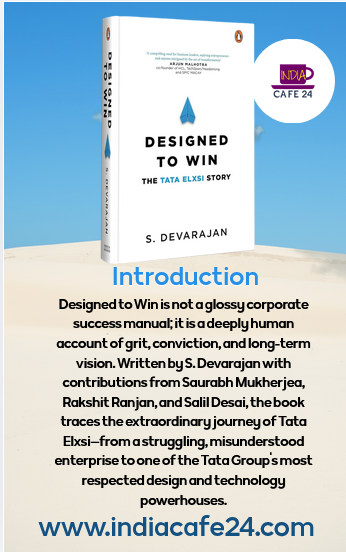
At its core, the book explores a simple but powerful idea: companies don’t win by chasing trends; they win by staying true to their core strengths while adapting intelligently to change. Tata Elxsi’s story unfolds against the backdrop of India’s liberalization, technological shifts, and global competition. The narrative follows Devarajan’s journey—from his early career days to becoming the CEO entrusted with steering Tata Elxsi through financial distress, strategic confusion, and market skepticism.
Plot Overview –Designed to Win
The book is structured chronologically, beginning with the origins of Elxsi in Silicon Valley and its eventual transition into Tata Elxsi in India. It details the company’s early struggles with hardware manufacturing, mounting losses, and strategic dead ends.
The turning point comes with a decisive shift—from hardware to high-end design and technology services. The narrative captures how Tata Elxsi carved out niche domains such as automotive design, aerospace simulation, medical imaging, animation, and visual effects—areas that most Indian IT firms avoided at the time. The journey culminates in Tata Elxsi’s emergence as a global design-led technology leader, respected not for scale, but for depth and innovation.
Character Development – Designed to Win
Writing Style – Designed to Win
The writing is lucid, conversational, and refreshingly honest. Technical complexities are explained without jargon, making the book accessible to both business professionals and general readers. Anecdotes—such as Devarajan’s early sales experiences and leadership dilemmas—add storytelling depth and keep the narrative engaging. The tone remains grounded, never boastful, which aligns well with the understated ethos of the Tata Group.
Key Themes and Insights
- Design-led thinking as strategy, not ornamentation
- People-first leadership during crisis
- Long-term value creation over short-term gains
- Staying niche in a scale-obsessed industry
- Resilience and reinvention as core leadership skills
These themes make the book especially relevant for founders, CXOs, and professionals navigating uncertainty.
Final Verdict –Designed to Win
Designed to Win is a rare business book that balances strategy with soul. It doesn’t promise shortcuts or formulas; instead, it offers wisdom earned through lived experience. For anyone interested in leadership, Indian corporate history, or the power of design and technology, this book is both instructive and inspiring.
Rating: ★★★★½ out of 5
A must-read for leaders who believe that winning is not about noise—but about purpose, patience, and precision.
TOPICS Book ReviewDesigned to Win – The Story of Tata ElxsiRakshit RanjanS. DevarajanSaurabh Mukherjea









Leave a Reply