
Color Psychology Series- Indigo: A Story the Mind Begins to See
Indigo: A Story the Mind Begins to See
After blue taught the voice how to speak truth, indigo arrived quietly. Its presence looks like twilight between day and night.
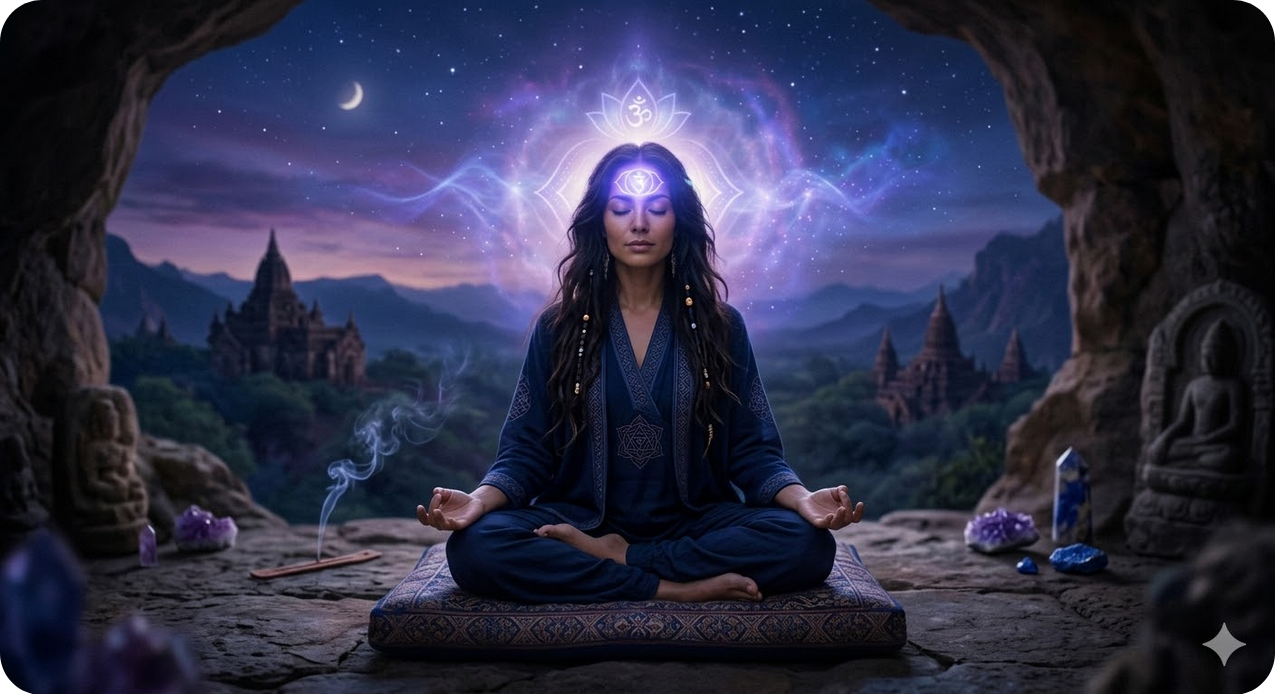
Image Generated by Google Gemini
Indigo did not demand attention. It invited perception. Indigo is the color of deep skies just before stars appear, the silent wisdom of midnight, and the mysterious space between thought and knowing. Does Indigo ask if you can speak the truth?
It asks, can you see beyond what is visible?
Our eyes can look, but only through indigo does the mind truly see. Indigo is where perception evolves into insight.
Indigo governs the Ajna Chakra, the Third Eye. It is located between the eyebrows. This color is the center of intuition, perception, imagination, and inner wisdom. If red grounds, orange flows, yellow empowers, green heals, and blue expresses, indigo perceives.
Those with balanced indigo energy possess a calm and awakening presence. They notice patterns which others miss. Many call it the SIXTH SENSE. Decisions often come to them through intuition rather than mere analysis. Their imagination is strong, but it is not lost in illusion. They trust the quiet voice within. You can also call it a connection with the Universe.
But when indigo becomes weak, confusion appears. A person may feel mentally scattered, unable to trust their own judgment. Overthinking replaces intuition. Life feels like constant doubt.
When indigo becomes excessive or unbalanced, imagination may turn into escapism or unrealistic thinking. One may become detached from reality, living more in ideas than in experience.
The body, once again, reflects the imbalance. Frequent headaches. Eye strain. Sinus pressure. Sleep disturbances. Memory lapses. The pineal and pituitary glands, deeply connected with hormonal balance and circadian rhythm, resonate strongly with this chakra.
The mind must become calm enough to hear the whisper of intuition and visualize it.
In color psychology, indigo represents depth, contemplation, perception, and higher mental awareness. Unlike bright stimulating colors, indigo draws the mind inward. It encourages reflection, meditation, and intellectual depth. This is why indigo often appears in academic robes, sacred spaces, and spiritual symbolism. Many of my healer colleagues make use of this color in their logo too.
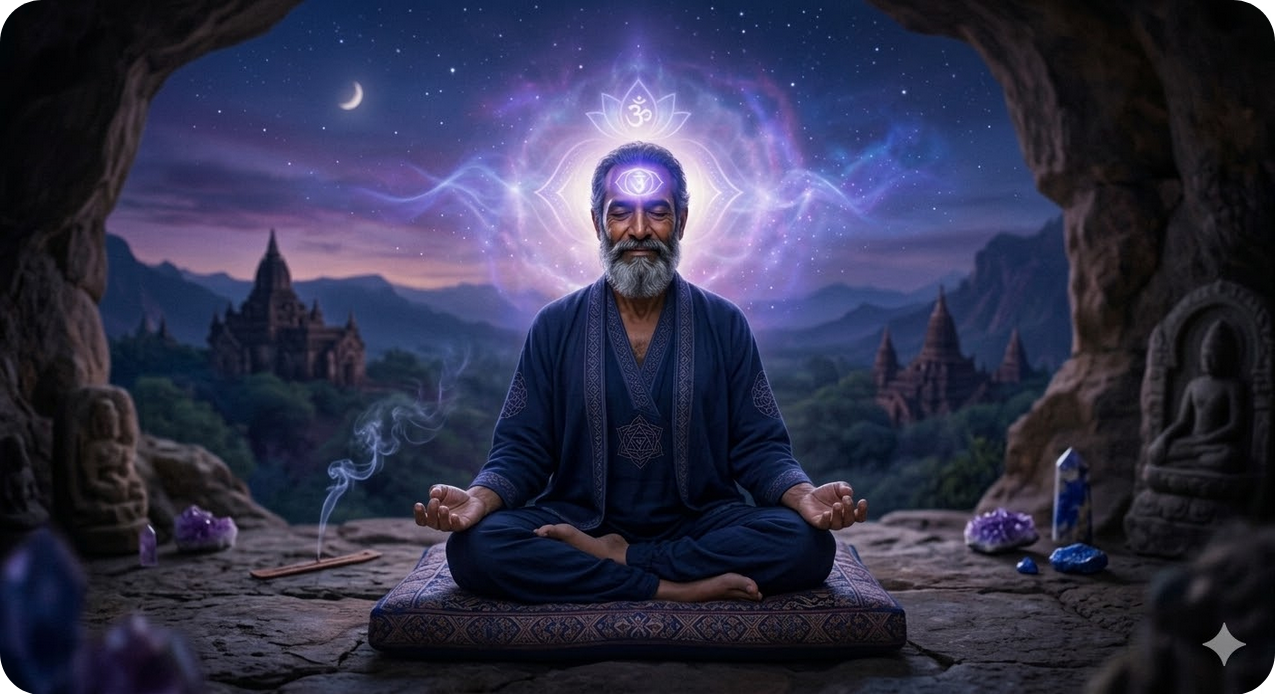
Image Generated by Google Gemini
People naturally drawn to indigo are often seekers. They are mostly philosophers, researchers, mystics, and deep thinkers. They question surface reality and look for hidden meanings. If you are a Tarot Reader, a Crystal healer, or even a Reiki Practitioner, strong intuition helps you to serve your clients better.
In daily life, indigo appears subtly. It is used in meditation rooms, spiritual artwork, and spaces meant for introspection. Too much indigo may feel heavy or isolating, while too little may keep the mind constantly distracted by the external world.
Healers work with indigo through meditation, visualization, and dream-journaling. They also use stones/crystals like Amethyst, Sodalite, and Iolite. These tools are not meant to escape reality but to sharpen perception. Amethyst is one such crystal which helps is clearing the chaos going in mind.
In occult traditions, indigo remained the color of mystical insight and psychic awareness. It is believed to strengthen intuition, spiritual vision, and the ability to perceive subtle energies. Seers, sages, and spiritual practitioners have long associated indigo with the awakening of inner sight.
Indigo asks an important question:
Are you seeing life as it is, or only as it appears?
If red says, Live.
If orange says, Feel.
If yellow says, Choose.
If green says, Open.
If blue says, Speak.
Indigo says, “See.”
And when the inner eye opens, the world reveals layers of truth that were always there—waiting quietly in the deep blue of the night sky.
Interestingly, indigo itself carries a symbolic balance of energies. Traditionally, indigo is understood as being composed of two-thirds blue and one-third red. This combination is deeply meaningful.
Blue represents calmness, truth, communication, and spiritual wisdom. Red represents life force, grounding, and survival energy. When these two combine, with blue dominating and red supporting, the result is indigo. It’s the color that blends spiritual awareness with grounded intuition.
In simple terms, indigo reminds us that true intuition is not just imagination. It is wisdom guided by experience and rooted in reality.
This blog post is part of ‘Blogaberry Dazzle’ hosted by Cindy D’Silva and Noor Anand Chawla.


Woww another insightful post with more details about my favourite colour indigo. Thanks for sharing these details
I am really liking these colour series. I like indigo. And now, I feel like keeping an indigo stone at home also.
interesting. and i agree that intuition comes from our past experiences and wisdom.
After reading your informative and insightful post, I have realised that my Ajna Chakra is active. Thank you for that. Indigo, in clothes and cutlery both, is a special favourite. I have been a Tarot Card Reader for 22 years now. And your post tells me why I have been attracted to Indigo. So loving this informative series!
I am enjoying this chakra or colour series. Now I realise how strong my sixth sense is. Does that mean my Ajna Chakra is working well? I use indigo colour on my hair too :p
I have never given a thought to the colour indigo except for the fact that it is one of the seven colours of the rainbow. This series of yours surely gives such an indepth view on colours
Fascinating! You have generated a new interest in me for colors. Thanks for that.
Now I realise why indigo often gets so much attention, be it in fabrics, paintings and even decor. It’s a beautiful soothing colour and is uniquely stylish too.
The idea of the mind beginning to truly “see” was so deep and thought-provoking. I loved how you captured that quiet shift from awareness to insight
Another favourite colour of mine, and if what you say is true about being attracted to this colour means I’m a seeker, I feel great about that. Anything I find during my seeking journey, I would embrace just as I embrace this lovely colour series of your. May we all be blessed with “seeing” and learning as much as we can.
Intersting . This series on colours is one of my favourite reads. I look forward to it.
I love indigo. When I was a kiddo, my mom narrated me a famous Bengali story “Neel Darpan”. Something that stayed with me for long.
Never really gave indigo much thought before, but this explained so much.why it feels so calming and why we’re naturally drawn to it. Interestingly, this is the year I’ve started loving this colour even more. Quite fascinating. Looking forward to the next one.
What an interesting series of posts this is.