
Baa baa black sheep – And The Moral
Baa baa black sheep – And The Moral
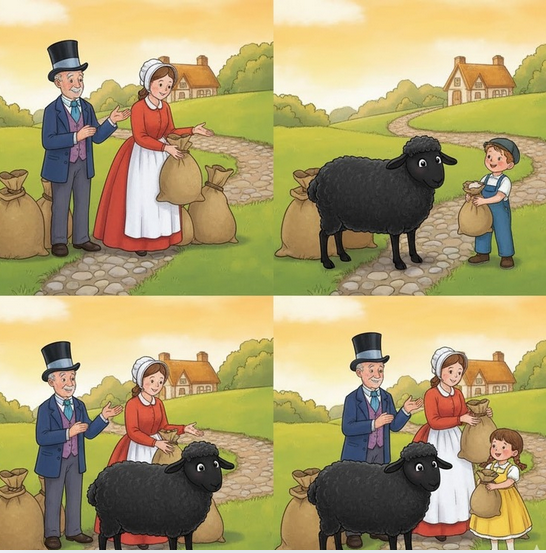
Baa baa black sheep, have you any wool? Yes sir, yes sir, three bags full! One for the master, one for the dame, And one for the little boy who lives down the lane.
Thank you said the master,
Thank you said the dame
And thank you said the little boy who lived down the lane.
Baa baa black sheep, have you any wool? Yes sir, yes sir, three bags full! One for the master, one for the dame, And one for the little girl who lives down the lane.
Thank you said the master,
Thank you said the dame
And thank you said the little girl who lived down the lane.
It is one of the oldest rhymes of all time. If I am not too wrong, many of our parents also read this in their childhood. The printed version of this rhyme first appeared in 1744, according to Wikipedia, in a book called Tommy Thumb’s Pretty Song Book. In olden times, sheep were very important because people used wool to make warm clothes. The rhyme shows how wool got shared among different people, and later it became a fun song for children. Well, the meaning of this rhyme was explained by my father when I was a kid, and explaining the lessons to Ani turned easy as I just repeated what my father told me. 🙂 Cheating >>>>>>>>>>>>>>>> 🙂
Lesson 1. Sharing Makes Everyone Happy
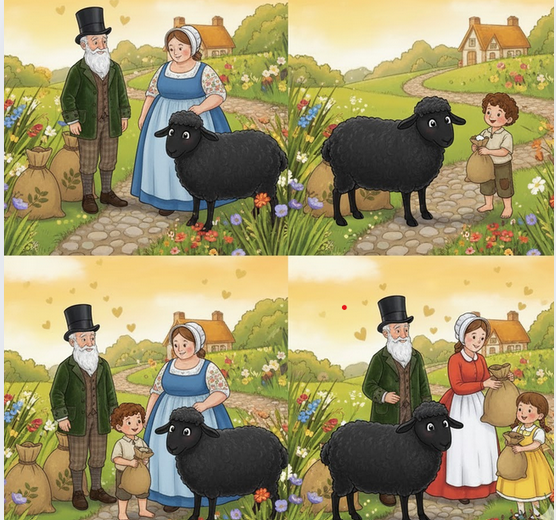
The black sheep gives wool to everyone. Yes, to the master, the dame, and the little boy or girl.
When we share what we have, we spread happiness all around. When we spread happiness, we attract happiness in our lives.
Lesson 2. Kindness Should Be Equal for All
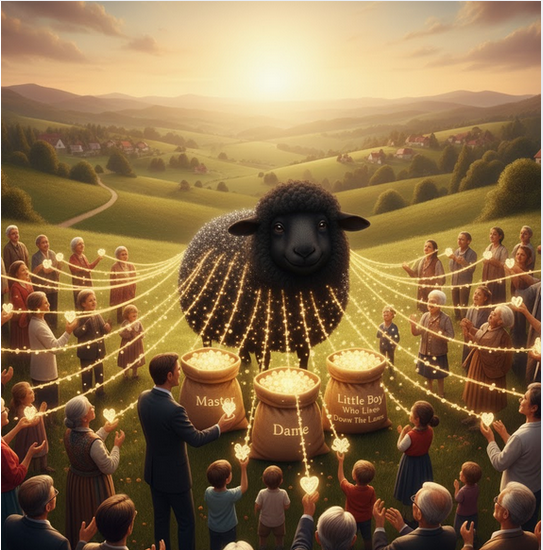
The sheep doesn’t discriminate and it gives something to each person.
Treat everyone with kindness, whether big or small, rich or poor. Being kind is not restricted to any gender or social norms. Kindness is for all and all deserve kindness. Being kind is a way of spreading love.
Lesson 3. Gratitude is Powerful
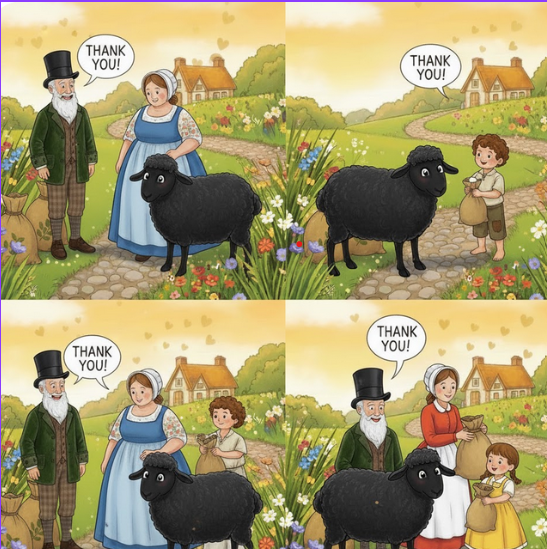
Everyone who receives the wool says thank you. Always say thank you when someone helps you or gives you something. Gratitude shows respect. Showing gratitude helps you attract the blessings of Universe.
Lesson 4. Helping Others Brings Joy

The sheep is willing to help without complaining. Helping others makes our heart feel full, just like the sheep’s three bags of wool. Helping others is another way of embracing happiness in life.
Lesson 5. We All Have Something to Give

Even a small sheep can make a difference. No matter how small we are, we all have gifts, talents, or kindness to offer the world. Sharing is caring. Being kind to other is a noble act. Making others happy gives us blessings. Spreading love helps us getting love back.
Spreading love, embracing happiness, gratitude, and the power of giving ………… All these are not restricted to the kids only, but also for the adults. When we adults do all these, it educates our kids about the benefits and positivity of sharing and caring for others. The lessons I shared here in this post are all taught by my late father, and I just replicated them.
This blog post is part of ‘Blogaberry Dazzle’
hosted by Cindy D’Silva and Noor Anand Chawla.


It is heartwarming to see how you flipped the narrative from that dark origin to the beautiful lessons on sharing and kindness that your father taught you. I love that you are passing these values down to Ani now; it transforms a simple song into such a powerful parenting tool.
It is interesting how you give me a new perspective on a rhyme every time. Is this line part of the original rhyme? “And thank you said the little girl who lived down the lane” I have never heard of a little girl in the rhyme before. A few days ago, I gifted a 3-year-old girl some candy and asked her to share it with her brother. She cheekily replied, “Sharing is not caring!”
This is such a beautiful interpretation of the rhyme. I have been singing this daily with my little one but now knowing these lessons, the rhyme shines differently. So apt and beautiful!
Beautiful message through the rhyme. Be kind, gentle, treat everyone equally, be grateful and appreciative. If only, we follow this, the world would be a better place.
Beautiful message and love how nicely you have shared the origin and the intent of this nursery rhyme – to inculcate gratitude and kindness from the very beginning.
Such a thoughtful reflection, your breakdown of the rhyme and the lessons of sharing, kindness and gratitude feel grounded and real. It’s lovely how you’ve taken something so familiar and made it resonate anew.
Love this thought-provoking lessons! I wish you turn this series into a books so more people can read it!
Such a lovely, thoughtful take of turning a simple nursery rhyme into a deeper life lesson. Really beautiful.
I had read an article about the dark meanings of nursery rhymes, and this was one of those, specifically targeted towards black slaves. I am glad and somewhat relieved to read your version that brings positivity.
Sharing is one of the best takeaways from this rhyme. I like that it also preaches equality in a simple but nice way.
I am really enjoying your posts about your interpretations of the nursery rhymes we grew up learning and repeating without trying to understand what they were meant to teach us.
Thanks for bringing in new ideas to old nursery rhymes through our posts. Of course, we should have learned it much, much earlier. But at least, better late than never. 🙂
Another gem from the world of rhymes! You have done it again. Taken a rhyme to a high new level. Wish teachers teach rhymes with your lessons !
I can feel the warmth of your father’s teachings shining through. It’s a beautiful reminder that kindness, gratitude, and sharing are timeless values for both kids and adults alike.
Your post did a wonderful job of exploring the meaning behind “Baa, Baa, Black Sheep” and making it relatable for today — I appreciate how you invite readers to think beyond the rhyme, about generosity, fairness, and history. Your reflections feel thoughtful and spark curiosity.
I’ve only known this as a singing rhyme but to bring out a meaning this different is commendable
All of us know these rhymes but very few of us stop to think of the meanings behind them. Good job!