Author Rajesh Talwar: From Hindu College to Harvard to the House of Lords
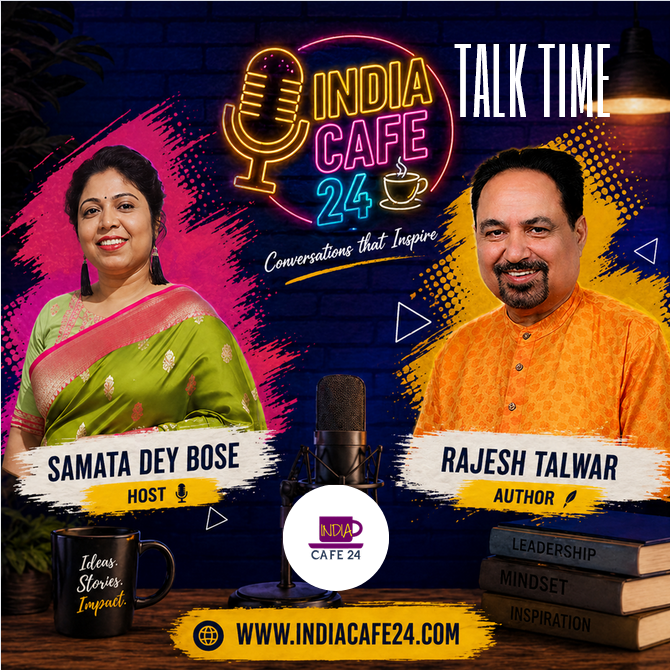
In a candid conversation with Samata Dey @TalkTime by Indiacafe24, Rajesh Talwar—acclaimed author and global policy expert, recently honoured at the India–UK Achievers Awards 2026—reflects on his journey across literature, law, and international policy. From the significance of being recognised at the British Parliament to addressing themes of justice, human rights, and identity, he shares crisp insights into storytelling, authenticity, and the evolving global creative landscape shaped by his work with the United Nations.
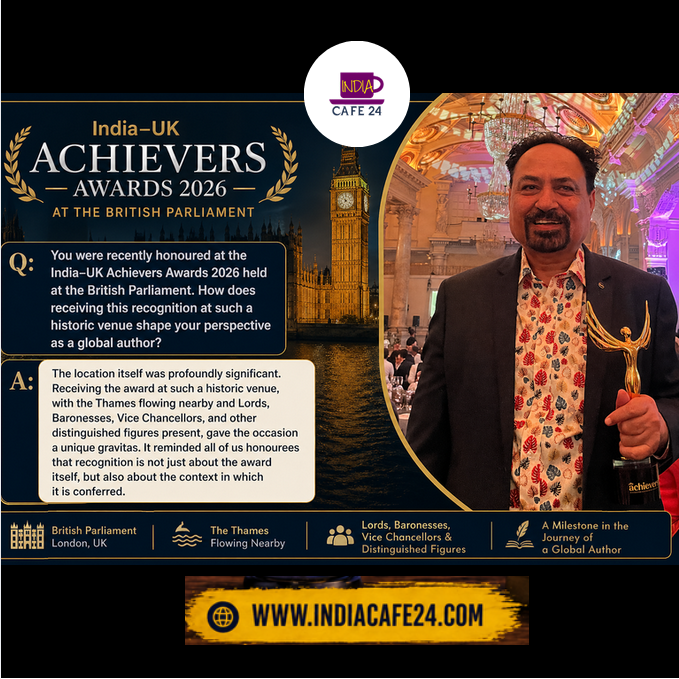
You were recently honoured at the India–UK Achievers Awards 2026 held at the British Parliament. How does receiving this recognition at such a historic venue shape your perspective as a global author?
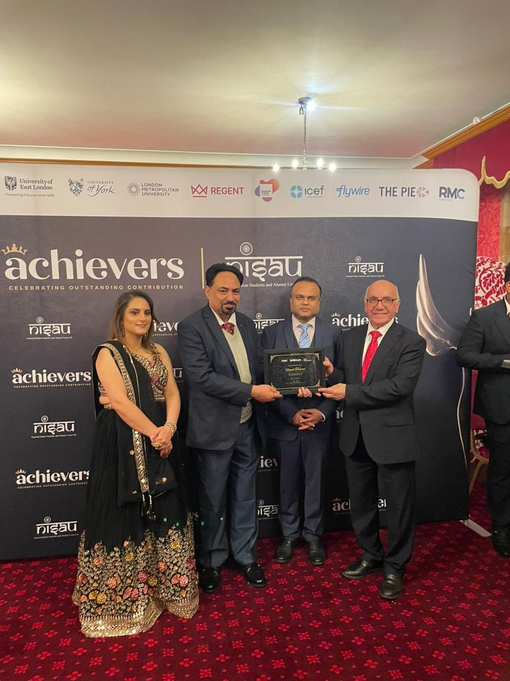
The location itself was profoundly significant. Receiving the award at such a historic venue, with the Thames flowing nearby and Lords, Baronesses, Vice Chancellors, and other distinguished figures present, gave the occasion a unique gravitas. It reminded all of us honourees that recognition is not just about the award itself, but also about the context in which it is conferred.
I have often thought it a pity that the Commonwealth Writers’ Prize does not host a physical ceremony where writers can gather together. The India–UK Achievers Awards demonstrated how powerful such a setting can be. The choice of venue reflected the seriousness with which the organizers approached the event, ensuring that invitees felt welcomed rather than burdened by formalities. On a lighter note, even the Head of Security at Parliament was kind enough to allow me a selfie, a small but memorable gesture that underscored the warmth of the occasion.
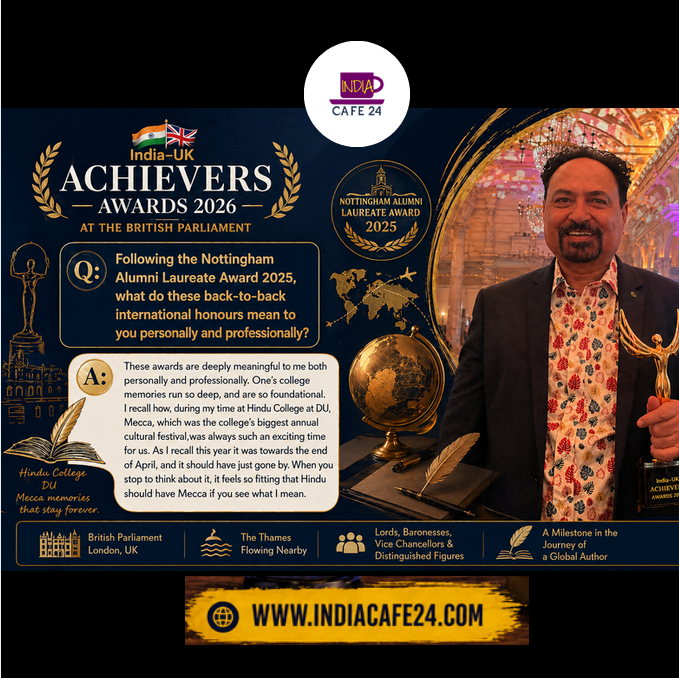
Following the Nottingham Alumni Laureate Award 2025, what do these back-to-back international honours mean to you personally and professionally?
These awards are deeply meaningful to me both personally and professionally. One’s college memories run so deep, and are so foundational. I recall how, during my time at Hindu College at DU, Mecca, which was the college’s biggest annual cultural festival,was always such an exciting time for us. As I recall this year it was towards the end of April, and it should have just gone by. When you stop to think about it, it feels so fitting that Hindu should have Mecca if you see what I mean.
For this reason, the Nottingham Alumni Laureate Award carried a special resonance, since I studied there on a scholarship and that experience shaped me in lasting ways. To be honoured by my alma mater felt like a recognition of that journey. Professionally, receiving back‑to‑back international honours affirms the value of my work across genres and platforms. What made these two awards especially significant is that they were not given for a single book, but for a body of work, with particular emphasis on the social impact of my writing.
Alumni networks can be important for any writer. For instance, last month The Harvard Independent published an Op‑Ed of mine comparing Nalanda University with Harvard, where I spoke about threats to academic freedom. It is a matter of prestige to be published in such a forum, and I do believe that my being an alumnus played a role in that opportunity.
It’s also important to acknowledge that in today’s world there are countless awards, some of which are unfortunately manufactured by PR agencies and lack credibility. What sets these honours apart is that they come from respected institutions with rigorous selection processes, which gives them genuine weight. For me, that authenticity is what makes them truly rewarding.
On a personal level, these awards also serve as motivation. They encourage me to keep pushing boundaries in my writing, to explore new genres, and to reach wider audiences. In that sense, they are not just recognition of past work but an inspiration for the future.
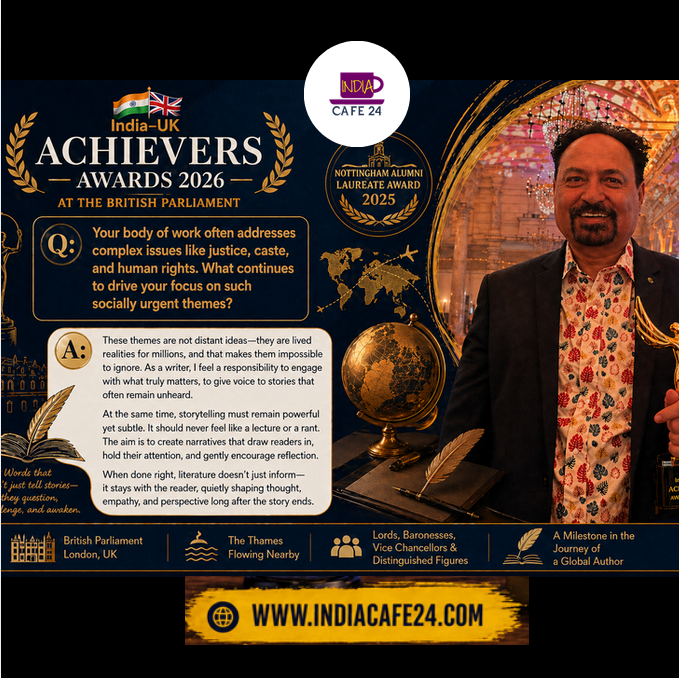
Your body of work often addresses complex issues like justice, caste, and human rights. What continues to drive your focus on such socially urgent themes?
I believe it is incumbent on a writer to engage with important social issues in at least some of their work. Themes such as justice, caste, and human rights are too urgent to ignore, and literature has a unique power to illuminate them. At the same time, the writing must never descend into a rant; it should remain an engaging piece of storytelling that draws the reader in and allows them to reflect naturally on the issues being raised.
That said, I also value writing, and reading for the sheer pleasure it brings. Not every book needs to carry a social message. The joy of narrative, character, and imagination is equally important, and I try to balance both impulses in my body of work.
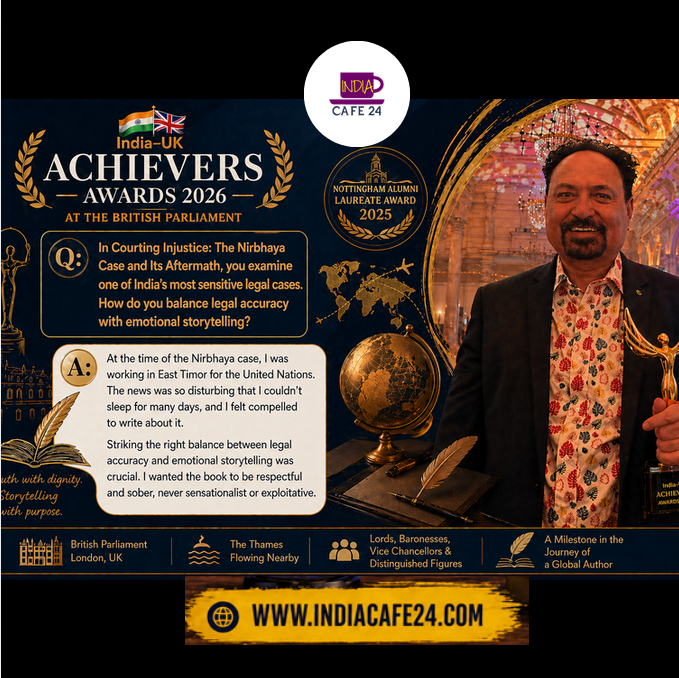
In Courting Injustice: The Nirbhaya Case and Its Aftermath, you examine one of India’s most sensitive legal cases. How do you balance legal accuracy with emotional storytelling?
At the time of the Nirbhaya case, I was working in East Timor for the United Nations. The news was so disturbing that I couldn’t sleep for many days, and I felt compelled to write about it. Striking the right balance between legal accuracy and emotional storytelling was crucial. I wanted the book to be respectful and sober, never sensationalist or exploitative.
That commitment extended beyond the writing itself, even to how the book was presented. I ensured the cover was dignified, and I declined certain media interviews, including one with Radio Mirchi, because I felt the tone would not do justice to the victim. For me, it was essential that the work honour her memory while also providing readers with a clear, accurate understanding of the legal and social issues surrounding the case.
Your book The Third Sex and Human Rights explores marginalized identities. How do you approach writing about communities with sensitivity and authenticity?
For me, the guiding principle is simple: at the end of the day, we are all human. It ought not to matter whether you are Hindu, Muslim, Sikh, or Christian, whether we are white, Black, or brown, or whether we belong to different sexual orientations. In a world that often feels divided, and given India’s own ancient traditions of diversity and inclusion, I believe it is vital to raise these issues with sensitivity and authenticity. My aim is always to give voice to communities that have been silenced, while reminding readers of our shared humanity.
During my studies at the University of Nottingham, I chose to focus my dissertation on this marginalized sexual minority, the so-called ‘third sex’ whose human rights were being denied. That dissertation eventually became the book.
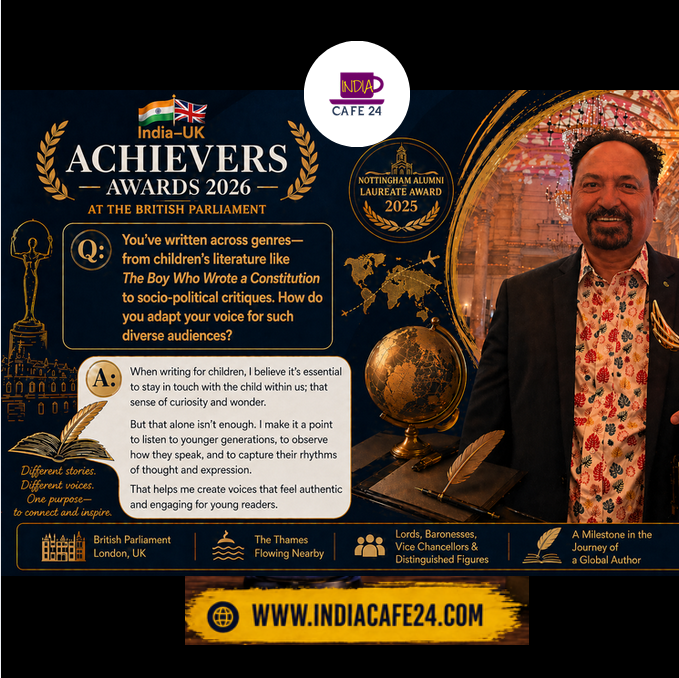
You’ve written across genres—from children’s literature like The Boy Who Wrote a Constitution to socio-political critiques. How do you adapt your voice for such diverse audiences?
When writing for children, I believe it’s essential to stay in touch with the child within us; that sense of curiosity and wonder. But that alone isn’t enough. I make it a point to listen to younger generations, to observe how they speak, and to capture their rhythms of thought and expression. That helps me create voices that feel authentic and engaging for young readers.
At the same time, adapting across genres requires flexibility. For socio‑political critiques, the tone must be precise, analytical, and respectful of complexity, whereas for children’s literature it should be playful, imaginative, and accessible. As Amitabh Bachchan perceptively remarked, inside every writer there is an actor and I think that’s true. Writers must be able to inhabit different roles and voices depending on the audience they are writing for.
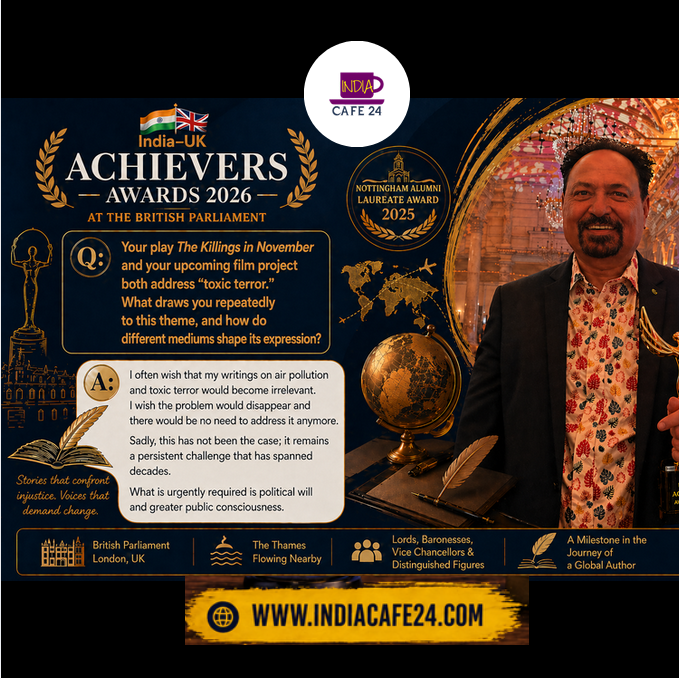
Your play The Killings in November and your upcoming film project both address “toxic terror.” What draws you repeatedly to this theme, and how do different mediums shape its expression?
I often wish that my writings on air pollution and toxic terror would become irrelevant. I wish the problem would disappear and there would be no need to address it anymore. Sadly, this has not been the case; it remains a persistent challenge that has spanned decades. What is urgently required is political will and greater public consciousness.
Different mediums allow me to approach the theme in distinct ways. Theatre, for instance, provides immediacy and intimacy, while cinema is a powerful medium with the potential to reach vast audiences. With the rise of AI and new technologies, I felt it was important to explore film as a way of amplifying the message. Having studied filmmaking at the London Film Academy, I am now putting that training to use in my upcoming project, together with Ananya Sharma, my tech savvy co-director. It is our hope to combine craft and advocacy to spark awareness and change.
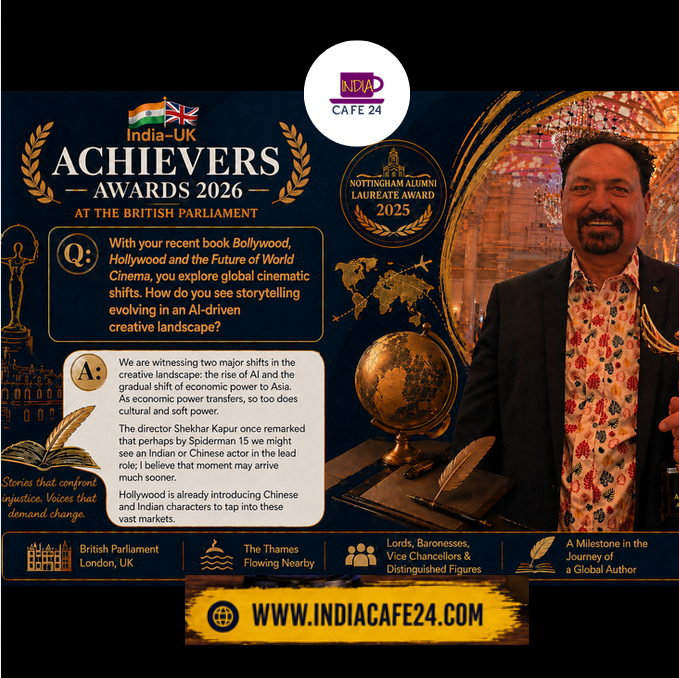
With your recent book Bollywood, Hollywood and the Future of World Cinema, you explore global cinematic shifts. How do you see storytelling evolving in an AI-driven creative landscape?
We are witnessing two major shifts in the creative landscape: the rise of AI and the gradual shift of economic power to Asia. As economic power transfers, so too does cultural and soft power. The director Shekhar Kapur once remarked that perhaps by Spiderman 15 we might see an Indian or Chinese actor in the lead role; I believe that moment may arrive much sooner. Hollywood is already introducing Chinese and Indian characters to tap into these vast markets.
Satyajit Ray once said that Indian filmmakers often create intimate cinema because we lack the budgets for large‑scale spectacles involving earthquakes, famines, or wars. AI is beginning to change that reality, enabling filmmakers to reproduce complex scenes at a fraction of the cost. If we carry out the necessary reforms and harness these technologies wisely, I believe we can substantially increase our share of the global film market. Storytelling will evolve to be more inclusive, more ambitious in scale, and more globally interconnected than ever before.
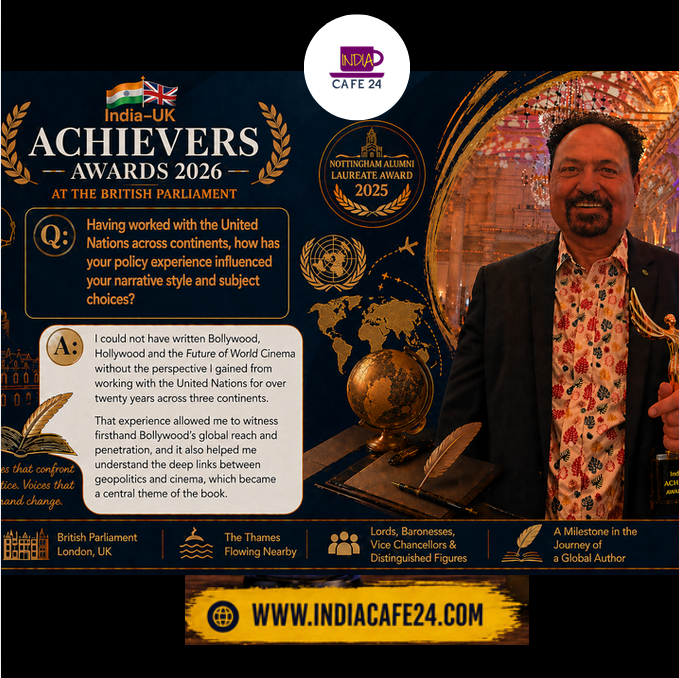
Having worked with the United Nations across continents, how has your policy experience influenced your narrative style and subject choices?
I could not have written Bollywood, Hollywood and the Future of World Cinema without the perspective I gained from working with the United Nations for over twenty years across three continents. That experience allowed me to witness firsthand Bollywood’s global reach and penetration, and it also helped me understand the deep links between geopolitics and cinema, which became a central theme of the book.
Similarly, my exposure to international institutions and opportunities through the UN made it possible for me to study at places like Harvard, Oxford, and Cambridge, which in turn informed my book Harvard, Oxford and Cambridge: The Past, Present and Future of Excellence in Education. In that sense, both my subject choices and my narrative style have been profoundly influenced by my UN career. It gave me a global lens, a sensitivity to cultural nuance, and a commitment to connecting policy experience with storytelling.
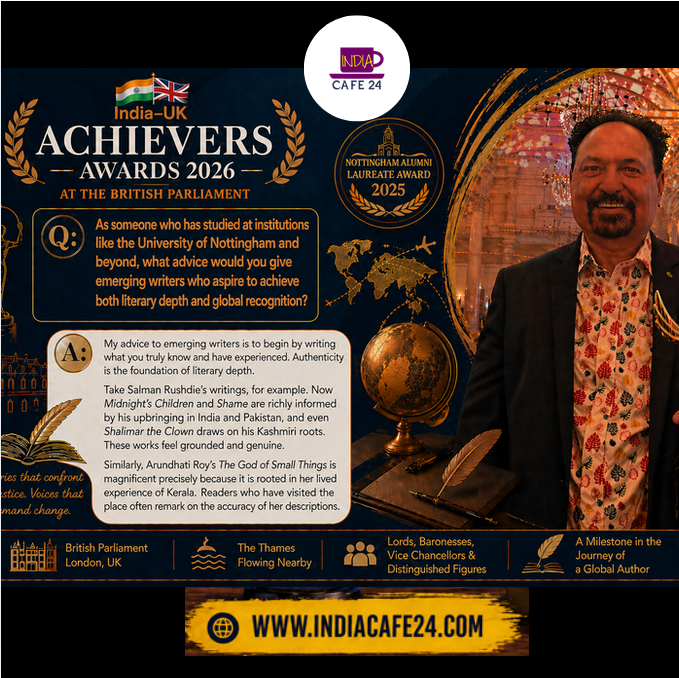
As someone who has studied at institutions like the University of Nottingham and beyond, what advice would you give emerging writers who aspire to achieve both literary depth and global recognition?
My advice to emerging writers is to begin by writing what you truly know and have experienced. Authenticity is the foundation of literary depth. Take Salman Rushdie’s writings, for example. Now Midnight’s Children and Shame are richly informed by his upbringing in India and Pakistan, and even Shalimar the Clown draws on his Kashmiri roots. These works feel grounded and genuine. Similarly, Arundhati Roy’s The God of Small Things is magnificent precisely because it is rooted in her lived experience of Kerala. Readers who have visited the place often remark on the accuracy of her descriptions.\
When writers move into areas without the necessary background or field experience, even if it is someone with the stature of Arundhati, the work can risk becoming ideological or polemical rather than literary. That is why I encourage young writers to cultivate depth by drawing on their own lives, cultures, and observations. Global recognition will follow when the writing is authentic and resonates universally.
One more thing. As India gains in status and prestige internationally, we, in India, must also think about creating our own platforms for recognition. I believe India should institute international awards that celebrate excellence across literature, cinema, architecture, and the arts. With juries composed of both Indian and global experts, such awards could eventually command the same prestige as the Booker, ensuring that outstanding work from diverse voices receives the recognition it deserves.




Leave a Reply